What the numbers on waterproof gear actually measure
Marketing terms like 20,000mm and high breathability sound precise, but each one measures a single narrow condition. Here is what the ratings cover and where they fall short.
Core ratings explained
Three ratings, three different questions
Hydrostatic head
Hydrostatic head measures how much water column a fabric resists before leaking under pressure. Higher numbers mean better resistance to sustained rain, not total storm comfort.
Breathability
Moisture vapor transmission ratings describe how much vapor passes through a membrane under lab conditions. Real results shift with humidity, temperature, exertion, and whether zips and vents are open.
DWR finish
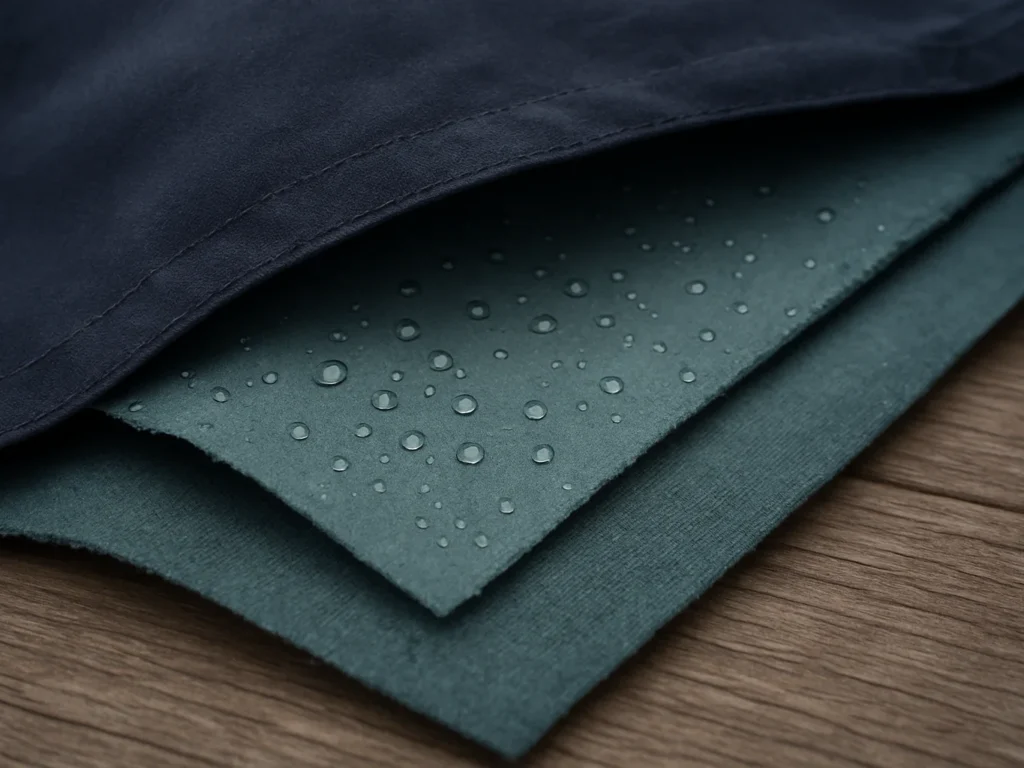
The durable water repellent coating makes water bead on the outer face before it soaks in. It wears down with abrasion and dirt, so it is renewable with proper care.
Membrane layers
How 2-layer, 2.5-layer, and 3-layer laminates differ
A 2-layer jacket bonds the membrane to a face fabric and adds a loose liner, which keeps the build light. A 2.5-layer uses a thin printed protective coating instead of a liner, saving weight but feeling less soft against the skin.
A 3-layer laminate sandwiches the membrane between a face fabric and an inner backer. It is the most durable and generally the most comfortable against the body, at a higher weight and cost.